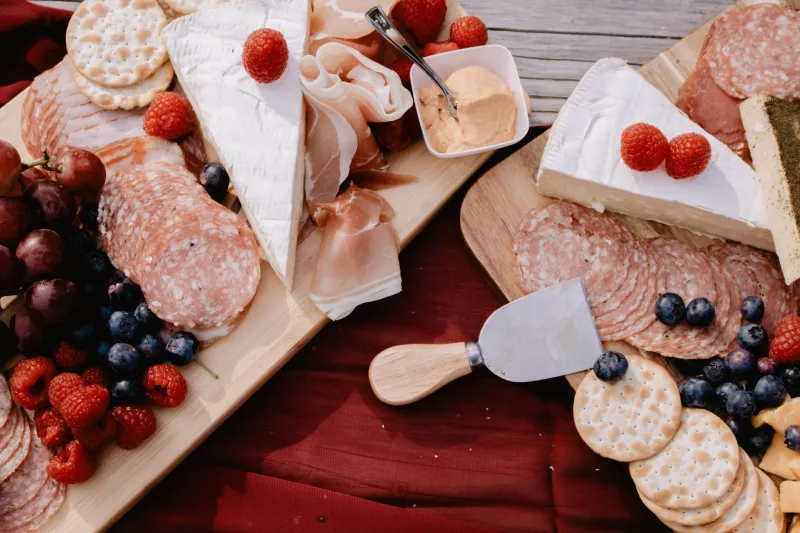
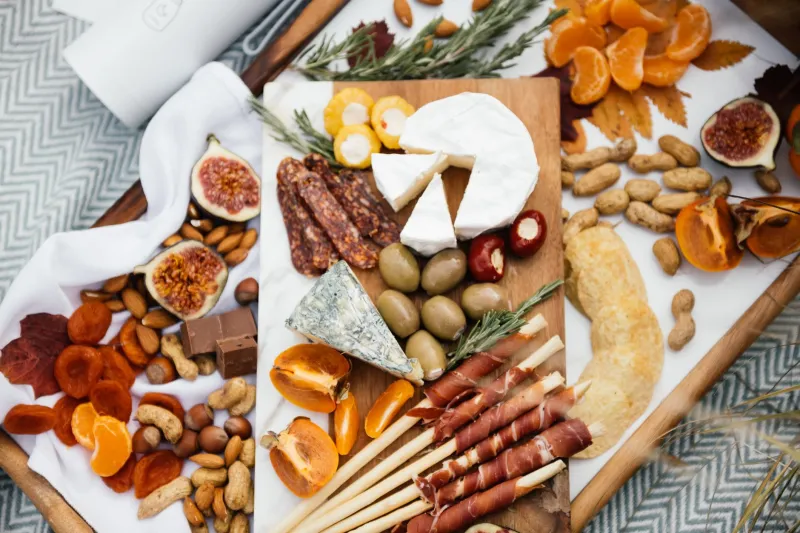
Cheese and Charcuterie 101: How to Build the Perfect Meat-and-Cheese Board Without Overthinking It
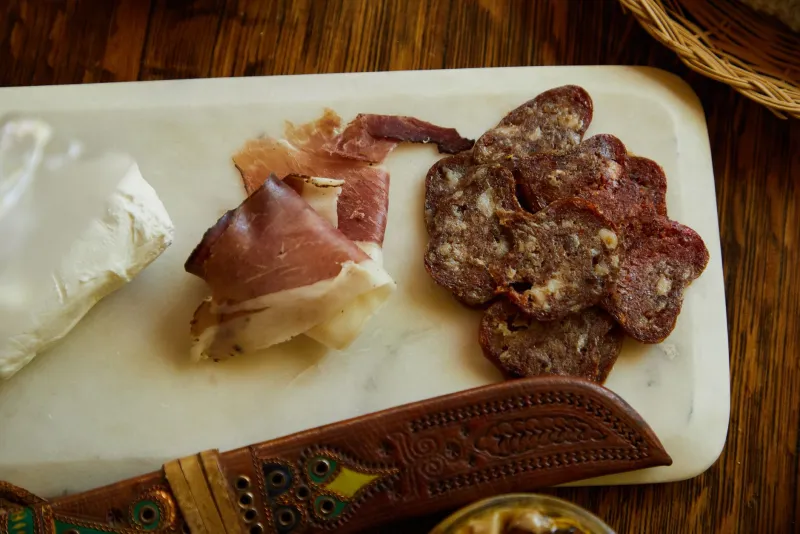
Let's address the elephant in the room — or rather, the salami on the board. Cheese and charcuterie go together so naturally that it almost feels like cheating. Fat plus salt plus umami plus more fat? Science didn't need to study it. We already knew.
But there's a difference between throwing some prosciutto next to a block of grocery store Swiss and actually building a board where every element is pulling in the same direction. The good news: it's not complicated. You just need a framework, a little bit of curiosity, and access to genuinely good ingredients.
Welcome to Cheese and Charcuterie 101. Class is in session.
The Golden Ratio (It's Not Actually a Math Problem)
First question every new board-builder asks: how much cheese, how much meat? Here's a reliable starting point:
- For a grazing board (pre-dinner snacking, party appetizer): roughly equal parts cheese and charcuterie by visual presence, with cheese as the slightly more dominant player.
- For a dedicated meat-and-cheese course: plan about 2 ounces of cheese and 1.5 ounces of charcuterie per person as a conservative estimate. Cheese enthusiasts — and let's be honest, you probably are one — should add 25% to that number.
The exact ratio matters less than making sure neither element feels like an afterthought. If your board looks like a meat platter that someone tossed some cheese at, recalibrate.
Building Your Cheese Lineup Around the Meat
This is where the pairing magic happens. Different cured meats have different flavor profiles, and the right cheese can amplify them beautifully.
Prosciutto di Parma or American-made prosciutto-style ham: This is delicate, sweet, and fatty. You want a cheese that's equally refined. Fresh mozzarella, a creamy burrata-style cheese, or a young Pecorino-style sheep's milk cheese all work beautifully. Avoid anything too pungent — it'll steamroll the prosciutto.
Soppressata or Calabrian-style salami: Bold, spicy, and assertive. Now you can bring in a washed-rind cheese with some funk, or a sharp aged cheddar with enough character to keep up. A creamy blue also works surprisingly well here — the fat in the cheese tames the heat.
Bresaola (air-dried beef): Lean, deeply savory, and a little mineral. Pair it with a nutty aged Gouda or a semi-firm sheep's milk cheese. The nuttiness echoes the beef's depth without competing with it.
Coppa or capicola: Rich, porky, and often slightly spiced. A mild, creamy cheese like a domestic Fontina or a young Gouda provides a cooling counterpoint. Or go full indulgence and put it next to a triple-cream — we're not going to stop you.
Smoked meats (smoked turkey, smoked sausage): Smoke calls for smoke, or at least for something robust enough to stand up to it. A smoked cheddar or a sharp aged American cheddar works perfectly. Alternatively, a pungent blue cuts right through the smokiness in a way that's deeply satisfying.
The Charcuterie Itself: Variety Is the Point
Just as you want contrast in your cheese selection, you want range in your meats. Aim for three to four different cured meats that represent different textures, fat levels, and flavor intensities:
- One delicate, thinly sliced option (prosciutto, bresaola)
- One medium-bold sliced salami (fennel salami, soppressata)
- One whole-muscle option if you can find it (coppa, lonza)
- One wildcard — a pâté, a rillette, or a spiced spreadable salami for the adventurous
American charcuterie has exploded in quality over the last decade. Producers in places like Vermont, California, and the Pacific Northwest are making world-class cured meats that pair beautifully with American artisan cheese. Keeping it domestic is a genuinely delicious choice.
The Accompaniments That Tie It Together
Cheese and charcuterie need a supporting cast. Here's what earns a spot on the board:
- Whole-grain mustard — essential with charcuterie. Don't skip it.
- Cornichons or bread-and-butter pickles — the acidity cuts through fat and resets the palate.
- Fig jam or quince paste — sweet contrast against salty, savory meats and aged cheeses.
- Olives — briny, firm, and they fill visual gaps beautifully.
- Sliced baguette and hearty crackers — you need a vehicle. Don't make people eat off the board with their hands. (Unless that's the vibe. We don't judge.)
The One Mistake Almost Everyone Makes
Overcrowding. Seriously. A packed board looks impressive for about thirty seconds, then it becomes impossible to navigate and everything starts merging into one indistinguishable pile of deliciousness. Leave breathing room. Use small bowls and ramekins to contain the wet or loose elements. Give each cheese and each meat its own designated zone.
A well-organized board is a board people actually use — and one they remember long after the last cracker is gone.
Final Thought: Let the Cheese Lead
At CheddrBox, we're obviously a little biased, but we'll say it anyway: the cheese should be the star. The charcuterie is an excellent co-star — essential to the production, beloved by the audience, definitely getting its own spin-off. But when you're building this board, start with the cheese. Let it set the tone. Then build the rest of the cast around it.
Start with exceptional artisan cheese, add thoughtfully chosen meats, fill in the gaps with smart accompaniments, and you've got a board that doesn't just look great — it tells a story. Your guests will eat every last bite of it.