Hot Cheese in a Pot: It's Time to Bring Fondue Back to Your Winter Gatherings
Hot Cheese in a Pot: It's Time to Bring Fondue Back to Your Winter Gatherings
Somewhere between the avocado-green appliances and the macramé plant hangers, fondue got lumped in with all the other things we decided to leave in the 1970s. Which is genuinely unfair, because fondue never did anything wrong. It just had bad PR.
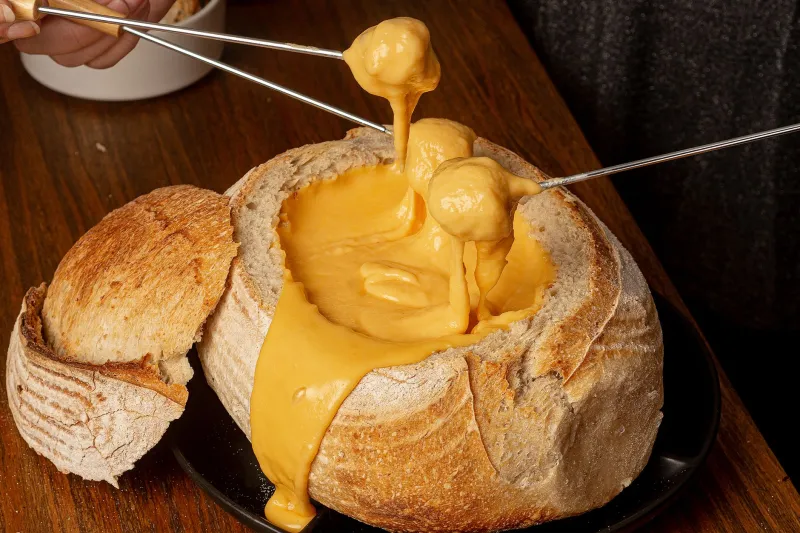
Here's what fondue actually is, stripped of the retro baggage: a communal pot of melted cheese, kept warm over a low flame, surrounded by things you want to dip into it. That's it. That's the whole concept. And if you can explain to us why that doesn't sound like a perfect winter evening, we're listening.
The problem was never the fondue. The problem was the cheese — specifically, the blocks of Swiss "fondue mix" from the supermarket freezer section that tasted like warm sadness. Swap those out for quality American-made artisan cheeses, and the entire experience transforms.
Why Fondue Deserves a Serious Second Look
We live in an era of elaborate charcuterie spreads, multi-course tasting menus at home, and dinner parties that require a spreadsheet to plan. Fondue is the antidote to all of that.
It's inherently social in a way that most foods aren't. Everyone leans in. Everyone shares the same pot. The act of dipping — swirling your bread through molten cheese, blowing on it, eating it off a long fork — is interactive in a way that forces people to actually look at each other. Put a fondue pot in the center of a table and watch conversations ignite faster than the Sterno underneath it.
It's also genuinely forgiving as a host. Make the cheese base, set out the dippers, light the burner. You're done. There's no plating, no timing, no checking the oven every eight minutes. Fondue is the rare entertaining format that lets you actually enjoy your own party.
The Cheese Is Everything — Choose Wisely
Classic Swiss fondue leans on Gruyère and Emmental, and there's a reason that combination has endured. But American cheesemakers have been quietly producing alpine-style wheels that melt just as beautifully — and with more interesting flavor profiles.
The key to fondue is choosing cheeses with good meltability. High-moisture, semi-firm cheeses with moderate fat content are your friends. Aged cheeses that are too dry or too hard can turn grainy and greasy when melted. Here's what works:
American Alpine-Style Wheels. Producers like Roth Cheese in Wisconsin make outstanding Gruyère-style wheels that melt into a silky, nutty base. Emmi Roth's Grand Cru is a particularly reliable pick and widely available.
Fontina Val d'Aosta-style domestics. Fontina melts like a dream and adds a mild, earthy depth that complements sharper cheeses in the pot. BelGioioso produces a solid domestic version.
Aged Gouda (medium, not ancient). A two- to three-year gouda adds caramel notes and complexity without the graininess of an older wheel. It pairs beautifully with a sharper alpine as a secondary cheese.
Mild to medium cheddar. Yes, really. A good American cheddar — particularly a younger Vermont or Wisconsin variety — brings a subtle tang that makes the fondue feel distinctly American. Don't go too aged or it'll break.
A ratio of roughly 60% alpine-style to 40% supporting cheese is a reliable starting point. Always add a splash of dry white wine and a little cornstarch to stabilize the emulsion and keep things smooth.
Modern Variations Worth Trying
The classic white wine and garlic base is timeless, but there's room to experiment once you've got the fundamentals down.
Beer Fondue. Swap the white wine for a crisp American lager or a light wheat beer and lean into a cheddar-forward blend. This is a crowd-pleaser that feels right at home at a football watch party or a casual winter hangout.
Smoked Cheese and Chipotle. Use a smoked gouda or smoked cheddar as part of your base and add a small amount of chipotle in adobo. The result is smoky, subtly spicy, and deeply satisfying. Pair with soft pretzels and pickled jalapeños.
Truffle and Herb. Add a drizzle of truffle oil and fresh thyme to a classic alpine base for something that feels dinner-party appropriate. Serve with crusty sourdough and roasted fingerling potatoes.
Dippers: The Supporting Cast That Steals the Show
The cheese is the star, but your dippers are what make it a full experience. Think beyond plain bread cubes.
- Crusty sourdough cut into generous chunks — the gold standard
- Soft pretzel bites — perfect for beer fondue variations
- Blanched broccoli and cauliflower — yes, vegetables work beautifully here
- Cornichons — the brininess cuts through the richness in a way that's almost mandatory
- Sliced apples and pears — fruit and melted cheese is a combination that never fails
- Roasted baby potatoes — arguably the best dipper of all, and wildly underrated
- Cured meats — salami and prosciutto on a fondue fork are a revelation
Equipment: You Don't Need Much
A dedicated fondue set is ideal — they're widely available and not expensive — but a small enameled cast-iron pot over a portable butane burner works just as well. The goal is consistent, gentle heat. You want the cheese warm and fluid, not bubbling aggressively.
Long fondue forks are part of the experience, but regular skewers or even chopsticks do the job in a pinch. Set out small plates for each guest and a few dipping sauces on the side — whole-grain mustard and a simple herb oil are both excellent.
The Real Point of Fondue
At its core, fondue isn't really about the cheese. It's about slowing down during the coldest, darkest months of the year and giving people a reason to gather around something warm. It's tactile and communal and a little bit silly, and that's precisely what makes it wonderful.
So dig that fondue pot out of the cabinet — or order one online, we won't judge — and invite some people over. Melt something spectacular from your CheddrBox selection. And remember: the only real fondue rule is that if you drop your dipper in the pot, you owe everyone at the table a story.