Forget Dessert: Why the Cheese Course Is the Dinner Party Finale You've Been Missing
Forget Dessert: Why the Cheese Course Is the Dinner Party Finale You've Been Missing
Let's have an honest conversation about how most American dinner parties end. Someone brings out a store-bought cheesecake, everybody eats a polite slice, and then people start checking their phones and talking about traffic. It doesn't have to be this way.
The cheese course — that elegant, unhurried European tradition of presenting a curated selection of cheeses after the main event — is arguably the most civilized way to close a meal ever invented. The French have known this for centuries. The Italians figured it out too. And yet here we are in the US, still relegating our best wedges to the pre-dinner appetizer table, where they compete with spinach dip and get ignored the moment the entrée hits.
It's time to fix that. And honestly? It's easier than you think.
Why After Dinner Is the Right Time for Cheese
There's actual logic behind serving cheese at the end of a meal, and it goes beyond sounding fancy. When cheese arrives as an appetizer, your guests are hungry and distracted — they're grazing mindlessly while juggling a glass of wine and making small talk. The nuance of a beautifully aged clothbound cheddar is completely lost.
After dinner, the mood shifts. Everyone slows down. Conversation deepens. A cheese course gives people a reason to linger at the table rather than migrate to the couch and stare at their phones. You're not just serving food at that point — you're creating a ritual. A reason to stay.
Bonus: your palate is also more attuned after a meal. The richness of a funky washed-rind or the crystalline crunch of an aged gouda lands differently when you're not starving.
Building Your Board: The Mild-to-Bold Principle
The secret to a great cheese course is sequencing. Think of it like a playlist — you don't open with the loudest song. You build toward it.
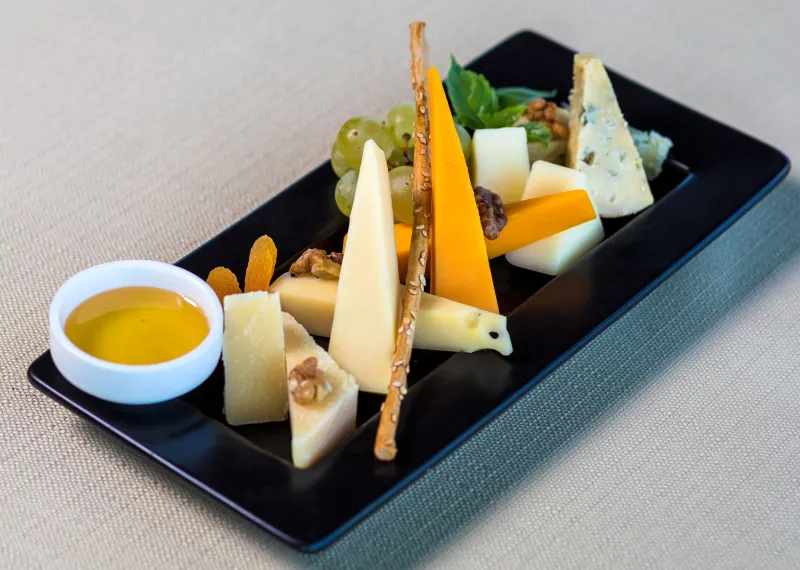
Aim for three to five cheeses and arrange them intentionally, guiding your guests from delicate to assertive.
Start mild. A fresh chèvre or a young, creamy brie-style wheel sets a gentle tone. These are approachable, crowd-pleasing, and won't overwhelm anyone right out of the gate. Look for something with a buttery, milky quality — a domestic triple-crème like Cowgirl Creamery's Mt Tam is a gorgeous opener.
Move to the middle. This is where you bring in semi-firm, more complex options. A nutty Comté-style American alpine, a young manchego, or a mild blue like Jasper Hill's Bayley Hazen Blue (which has a surprisingly gentle entry point) works beautifully here. These cheeses reward a little attention.
Finish bold. Save your funkiest, most assertive selection for last. An aged raw-milk cheddar, a pungent washed-rind, or a crumbly aged blue. This is the cheese people will still be talking about when they're driving home.
The Accompaniments That Actually Matter
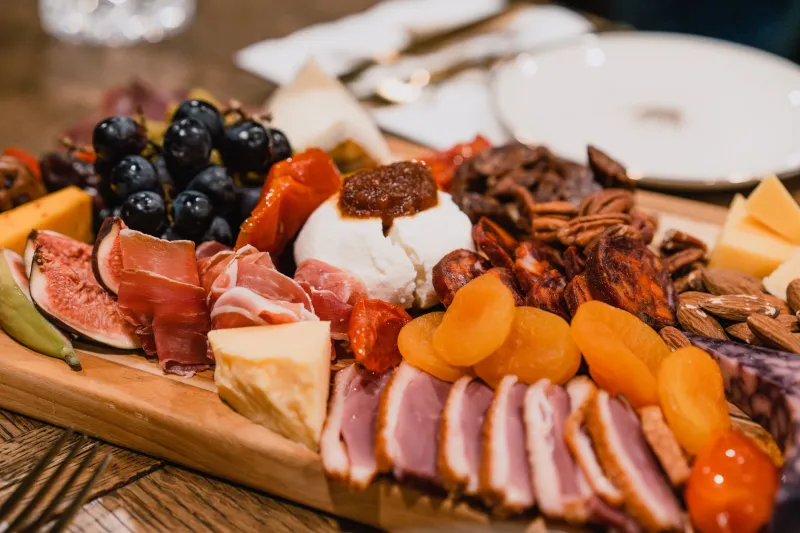
A cheese course lives or dies by what surrounds the wedges. This is not the place for a sleeve of Ritz crackers.
Honeycomb is non-negotiable. The floral sweetness cuts through bold, salty cheeses in a way that feels almost magical. Drape a piece next to your aged blue and watch your guests' expressions change.
Toasted nuts — particularly walnuts and Marcona almonds — add texture and a subtle bitterness that balances creamy cheeses beautifully. Don't skip them.
Dried fruit like Medjool dates, dried apricots, or fig jam creates contrast and gives the board a visual warmth. Pair fruit-forward accompaniments with your funkier selections for balance.
Two or three crackers or bread options is plenty. A plain water cracker, a seeded crispbread, and a sliced baguette cover all the bases without turning the board into a carb buffet.
Skip the fruit salad. Keep it simple and intentional.
Timing, Temperature, and the Thirty-Minute Rule
Here's the single most important cheese course tip that almost nobody follows: take your cheeses out of the refrigerator at least thirty minutes before serving. Cold cheese is muted cheese. Flavor compounds in dairy literally become more volatile — more aromatic, more expressive — at room temperature. A clothbound cheddar that tastes flat and rubbery straight from the fridge becomes something entirely different when it's had time to breathe.
As your guests are finishing their entrée, slip away to the kitchen and arrange your board. By the time you clear the plates, the cheese will be exactly where it needs to be.
Making It a Conversation, Not a Lecture
One gentle note: the cheese course works best when it sparks curiosity rather than a TED talk. You don't need to narrate every selection in detail. A small handwritten card next to each cheese with just the name and milk type is more than enough. Let people discover things on their own. Let them ask questions.
That's the real magic of the cheese course. It gives everyone something to talk about that isn't work, weather, or whatever's happening in the news. It slows the evening down in the best possible way.
At CheddrBox, we'd argue that a thoughtfully assembled cheese course is worth more than any fancy dessert you could plate. It's personal, it's memorable, and it tells your guests something about who you are as a host.
So next time you're planning a dinner party, skip the cheesecake. End with the actual cheese. Your guests will thank you — and they'll stay a lot longer.