From Basement Corner to Brie Palace: Building Your Own Cheese Cave at Home
There's a moment in every serious cheese lover's journey when the mini fridge just doesn't cut it anymore. Maybe you've got a gorgeous raw-milk cheddar that deserves better than sharing shelf space with last Tuesday's takeout. Maybe you've started dreaming in humidity percentages. Maybe — and we say this with love — you've begun referring to your cheese by name.
Whatever tipped you over the edge, welcome to the cheese cave rabbit hole. It smells fantastic down here.
Building a dedicated aging environment isn't as intimidating as it sounds. It's also not as expensive as you'd fear — unless you want it to be, in which case, we fully support your life choices. Let's break down how to go from cheese curious to full-on affineur, one climate-controlled corner at a time.
What Your Cheese Actually Wants From Life
Before you start converting your garage, it helps to understand what artisan cheese is looking for in a long-term relationship. Spoiler: it's consistent temperature, decent humidity, and a little airflow. That's basically what we all want.
Most aged cheeses thrive somewhere between 50°F and 58°F, with humidity hovering in the 80–95% relative humidity (RH) range. But the details matter depending on what you're aging:
- Bloomy rinds (Brie-style, Camembert): Cooler end of the range, around 50–52°F, with humidity near 90–95%. These are the drama queens of the cheese world — they want it just so.
- Washed-rind cheeses (think Taleggio or American originals like Red Hawk): Similar temps, but they need regular attention — wiping down with brine or beer to develop that funky orange rind. High maintenance, absolutely worth it.
- Alpine and semi-firm styles (Gruyère, Comté-inspired): A little more forgiving. Mid-50s°F, humidity around 85–90%.
- Hard and aged styles (cheddar, Parmesan-style): Can tolerate slightly lower humidity, around 80–85%, and are the easiest to manage. The golden retrievers of the aging world.
Knowing your cheese's preferences before you set up shop will save you a lot of heartbreak — and a lot of expensive mold you didn't intend.
The Spectrum of Setups: From Thrifty to Truly Unhinged
Here's the good news: you don't need to blow your renovation budget to age cheese properly. There's a setup for every level of commitment.
Level 1: The Converted Wine Fridge (~$100–$300)
This is the sweet spot for most enthusiasts, and it's where a huge number of home affineurs get their start. A basic countertop wine cooler — the kind that holds 12 to 18 bottles — can be repurposed into a surprisingly capable aging chamber with minimal effort.
The catch? Standard wine fridges run dry, so you'll need to boost humidity manually. A small open container of water, a damp sponge, or a dedicated ultrasonic humidifier (look for compact models designed for reptile terrariums — yes, really) can get you to that 85–90% range. Pick up an inexpensive digital hygrometer/thermometer combo to monitor conditions, and you're in business for under $50 in accessories.
Bonus: wine fridges typically have wooden shelving or can be fitted with food-safe wooden boards, which helps regulate moisture and gives your rinds something breathable to rest on.
Level 2: The Dedicated Dorm Fridge with a Controller (~$200–$500)
For those ready to get more serious, a small chest freezer or compact refrigerator paired with an Inkbird or Ranco temperature controller gives you precise, programmable control over your aging environment. These external controllers plug between the outlet and your fridge, cycling power on and off to maintain your exact target temperature — no more relying on the fridge's built-in (and often inaccurate) dial.
Add a USB-powered humidifier, a circulation fan to prevent stagnant air, and a two-zone thermometer to track conditions at different shelf levels, and you've got a genuinely impressive setup for under $400 total.
Level 3: The Basement Corner or Root Cellar (~$0 to Whatever You Want to Spend)
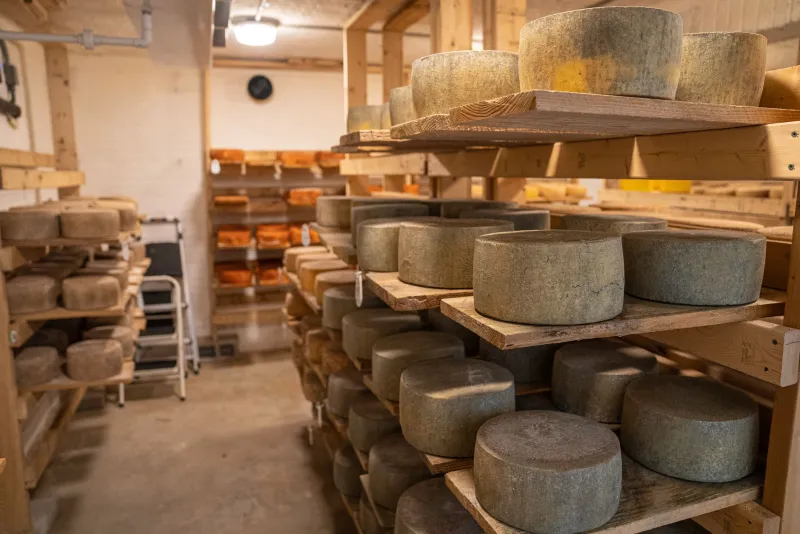
If you're lucky enough to have a basement that naturally stays in the 50s°F during cooler months, you may already be sitting on prime cheese real estate. Many older American homes — particularly in the Northeast and Midwest — have basement corners that hover right in the ideal aging range from late fall through early spring.
The investment here is mostly in shelving (untreated pine boards are traditional and work beautifully), airflow management, and monitoring equipment. A wireless hygrometer that sends readings to your phone means you can obsess over your cheese conditions from literally anywhere. We're not judging. We'd do the same.
Level 4: The Purpose-Built Chamber (Sky's the Limit)
For the truly committed — or those who have fully embraced the identity of "person who builds things for cheese" — purpose-built aging chambers using insulated panels, dedicated cooling units, and smart humidity systems exist. Brands like CoolBot (originally designed for walk-in coolers) let you turn a small insulated room or large chest freezer into a professional-grade setup. This is where things get expensive and spectacular in equal measure.
Managing Multiple Cheese Types in One Space
Here's where home aging gets genuinely tricky: different cheeses don't always play nicely together. A pungent washed-rind wheel left unchecked will happily migrate its mold onto a delicate bloomy rind. Blue cheese, in particular, is the neighbor who blasts music at 2 a.m. — its spores will colonize everything in reach if you're not careful.
A few rules to age by:
- Keep blues isolated. Seriously. A dedicated container or a separate shelf with good airflow separation is the minimum. Some purists keep blues in a separate unit entirely.
- Use ripening boxes or food-safe containers with loose lids for softer cheeses. This creates a microenvironment with slightly higher humidity without affecting the whole cave.
- Rotate and flip regularly. Most aged cheeses benefit from being turned every few days to ensure even rind development and prevent flat spots.
- Label everything. Date of entry, cheese type, intended aging duration. Future you will be grateful. Future you will also be eating excellent cheese, so it evens out.
The Part Nobody Tells You
Building a cheese cave is genuinely one of the more satisfying food hobbies you can pick up — and not just because the end result is delicious. There's something deeply rewarding about tending to a wheel of cheese over weeks or months, watching the rind develop, adjusting conditions, and eventually cutting into something you helped coax into existence.
It also gives you an excellent excuse to order more cheese. From, say, a certain artisan cheese subscription service that ships directly to your door. We're not naming names, but we are absolutely CheddrBox.
Start small, stay curious, and don't be afraid of a little unexpected mold. In the cheese world, that's usually just Tuesday.