How to Order Artisan Cheese at Any Restaurant in America Without Breaking a Sweat
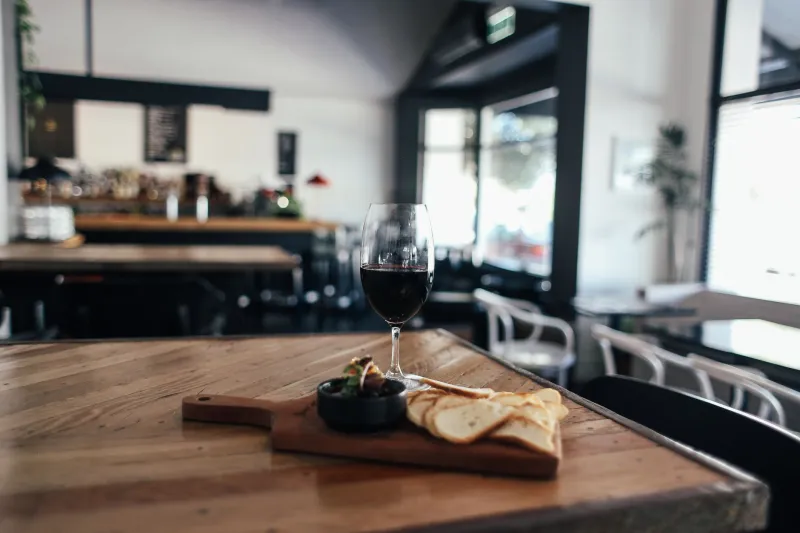
Picture this: you're sitting in a candlelit restaurant, the server slides over a menu the size of a small novel, and somewhere in the middle of it — wedged between "hand-foraged mushroom risotto" and "deconstructed tiramisu" — is a cheese course section written entirely in what appears to be a foreign language. Époisses de Bourgogne. Robiola Bosina. Humboldt Fog. You nod slowly, like you understand. You do not understand.
We've all been there. And honestly? It's time to stop nodding and start eating.
Restaurant cheese programs in America have exploded over the last decade, and that's genuinely great news for anyone who considers themselves a cheese enthusiast (or aspiring enthusiast — welcome, you belong here). From serious fromage carts in New York and San Francisco to surprisingly excellent curated boards at neighborhood wine bars in Nashville and Denver, there has never been a better time to let a restaurant do the sourcing legwork for you. You just have to know how to work the room.
Stop Fearing the Menu Description
Here's the thing about pretentious cheese menu copy: most of it is actually useful information dressed up in intimidating clothing. When a menu says something like "aged 90 days on spruce planks, washed rind, barnyard forward with a lingering mineral finish," it is genuinely trying to tell you something.
Break it down. Washed rind = funky, pungent, probably orange on the outside. Aged 90 days = not a fresh cheese, expect more complexity. Barnyard forward = this cheese smells like a farm, which is a compliment. Mineral finish = think of that clean, almost rocky taste you get from a good mountain cheese.
The vocabulary isn't gatekeeping — it's a map. Once you learn a handful of terms (bloomy rind, alpine-style, cave-aged, clothbound), you can decode almost any cheese course description in the country. And if you encounter something that genuinely stumps you? That's what servers are for.
Your Server Is Not Judging You — Ask Everything
Good cheese programs exist because someone in that kitchen actually cares. And if someone in the kitchen cares, there's a solid chance your server either cares too or has been trained by someone who does. Either way, they want you to order the cheese course. It's in everyone's interest.
Ask questions without apology. "What's the funkiest one on here?" is a completely legitimate question. So is "Which one is best for someone who usually goes for something mild?" or "Is anything on here from a local producer?" That last one, by the way, is a golden question. American restaurants increasingly source from regional creameries — a cheese program in Portland, Oregon might be featuring something from Tillamook or Tumalo Farms. A spot in Vermont could be pouring something from Jasper Hill. These are discoveries you can take home.
If the server draws a blank, ask to speak with the cheesemonger or cheese buyer if there is one. Serious programs have them. Asking for that person is not pretentious — it's exactly the right move, and they will be delighted you did.
Reading the Selection: What to Look For
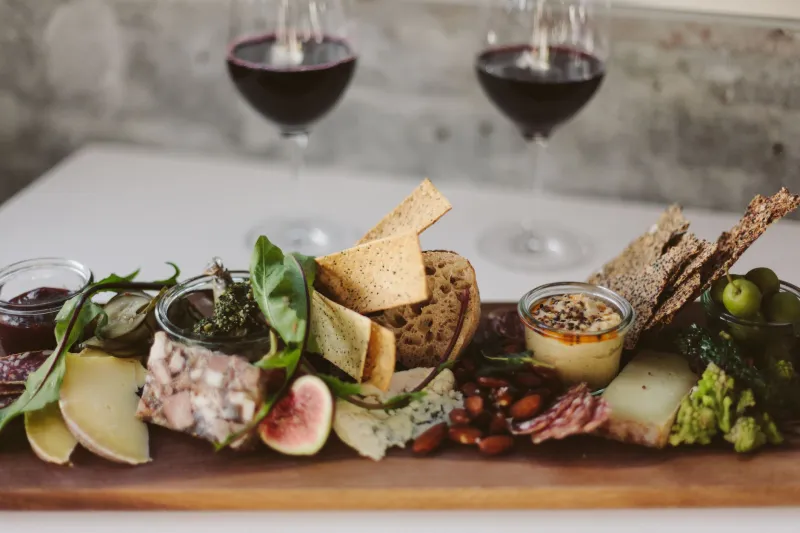
Most restaurant cheese courses are built around contrast, and that's your friend. A well-curated selection will typically move through a range of milk types (cow, goat, sheep), textures (fresh, semi-firm, aged, soft-ripened), and intensity levels (mild to nuclear). When you're building your order, try to hit a few different points on that spectrum rather than ordering three similar cheeses.
Look for the outlier on the menu — the one with the weird name, the unusual origin story, the unexpected aging process. That's often where the most interesting discovery lives. Restaurants put those on the menu because they're excited about them, and that excitement is usually justified.
Also pay attention to accompaniments. Honey, jam, candied nuts, fresh fruit — these aren't just garnish. They're flavor bridges, and a good restaurant has thought carefully about what pairs with what. When in doubt, drag everything through the honeycomb and don't look back.
Pairing the Cheese Course: Cocktails and Dessert Wines That Actually Work
Here's where things get genuinely fun. If the restaurant has a dedicated cheese program, there's a reasonable chance the bar team has thought about pairings too. Don't just default to whatever red wine you've been drinking through dinner — ask what they'd suggest alongside the cheese.
A few combinations that work beautifully and aren't as intimidating as they sound:
Sauternes or late-harvest Riesling with a creamy blue cheese is one of the great classic pairings in the world. Sweet wine and salty, funky cheese is not an accident — the contrast is the whole point, and it's spectacular.
Aged tawny Port alongside a hard, aged cheddar or Manchego-style cheese is a reliable crowd-pleaser. The nutty, caramel notes in the Port mirror what's happening in a well-aged cheese in a way that feels almost engineered.
An Amaro or bitter digestif can be a genuinely excellent move with a washed-rind cheese. The bitterness cuts through the richness in a way that's surprisingly refreshing.
A well-made Old Fashioned — yes, really — pairs beautifully with a smoky, aged gouda or a clothbound cheddar. Don't let anyone tell you cocktails and cheese can't coexist. They're wrong.
If you're skipping dessert in favor of the cheese course (a life choice we fully support and actively encourage), lean into sweeter pairings. The cheese course is dessert, and it should feel like a treat.
Use the Restaurant as a Research Lab
This is the part we really want you to take home — figuratively, though sometimes literally if they're selling retail. Every restaurant cheese course is a free tasting opportunity. You're paying for the experience, yes, but you're also building knowledge.
When you find a cheese you love, write it down. Take a picture of the menu. Ask the server who makes it and where it's from. American artisan cheesemakers — from Cypress Grove in California to Cabot Creamery in Vermont to Uplands Cheese in Wisconsin — are accessible, and their products are increasingly available to ship directly to your door (ahem).
The best version of dining out with cheese is treating it like a field trip. You're not just eating — you're taking notes for the next board you build at home, the next gift you send a friend, the next CheddrBox you crack open on a Tuesday because Tuesday deserves something good.
The Bottom Line
Restaurant cheese programs exist to delight you. They are not obstacle courses. They are not tests. They are curated invitations to try something new, ask a lot of questions, and eat extremely well.
So next time you see that cheese course section buried in the menu, don't nod and move on. Lean in. Ask the server what they love. Order the weird one. Pair it with something unexpected. And when you find a producer that stops you mid-bite — track them down.
That's how the best cheese discoveries happen: one restaurant menu at a time.