Always Ready, Always Delicious: How to Build a Cheese Pantry That Never Lets You Down
There are two kinds of people in this world: those who open the fridge at 9 p.m. on a Tuesday and find a sad wedge of processed American singles, and those who pull out a gorgeous aged Gouda, a firm Manchego-style wheel, and something funky wrapped in wax like they've been expecting company all along. The second type isn't luckier. They're just more prepared — and honestly, a little smug about it.
Building a strategic cheese pantry isn't hoarding (okay, it's slightly hoarding). It's about transforming the way you think about artisan cheese — less as a special-occasion splurge and more as a kitchen staple as essential as olive oil or a good hot sauce. The good news? It's not complicated. The even better news? It's an excuse to buy more cheese.
Why "Pantry Cheese" Is a Real and Important Thing
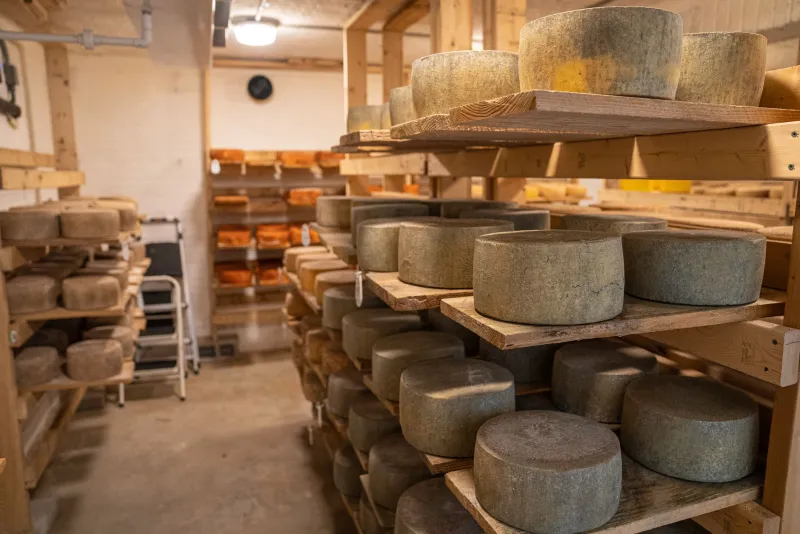
Most people treat artisan cheese like fresh flowers — beautiful, fleeting, and gone before you've really appreciated them. But plenty of artisan varieties are built to last. Aged and semi-aged cheeses can hold up beautifully in your refrigerator for weeks, sometimes months, when stored properly. The key is knowing which ones to reach for when you're building your reserve.
Think of your cheese pantry the way a sommelier thinks about a wine cellar. You're not buying everything at once and eating it all on Saturday. You're rotating, replenishing, and always keeping a few key players on deck for whatever life throws at you — unexpected guests, late-night snack emergencies, or the moment you realize you forgot to plan dinner again.
The Cheese Types That Belong in Your Rotation
Aged Hard Cheeses (Your Anchors) These are your workhorses. A well-aged Cheddar, a domestic Parmesan-style wheel, or a nutty aged Gruyère-style from a small American creamery can sit in your fridge — tightly wrapped — for a month or more without losing a beat. In fact, some improve with a little extra time. They're endlessly versatile: shaved over pasta, cubed onto a board, or eaten standing directly in front of the open refrigerator door. No judgment.
Wax-Coated or Rind-Protected Semi-Firms (Your Mid-Game Players) Gouda, especially the aged Dutch-style varieties produced by American artisan makers, is practically shelf-stable in its younger forms. Same goes for semi-firm waxed wheels from smaller domestic producers. The wax coating acts like a little protective suit, keeping moisture in and the outside world out. Once opened, wrap tightly in cheese paper or wax paper (not plastic — your cheese needs to breathe, people) and you've got weeks of reliable snacking ahead.
Alpine-Style Cheeses (Your Sophistication Insurance) A good domestic Alpine-style — think something inspired by Comté or Raclette, made by one of the many talented American cheesemakers now producing in this tradition — brings a depth of flavor that makes even a cracker-and-cheese situation feel intentional. These hold well, pair with almost everything, and make you look like you know exactly what you're doing.
A Wildcard Blue (For When You Want to Feel Alive) Keep one good blue in rotation. An American blue — Rogue Creamery out of Oregon makes exceptional ones, but there are terrific producers across the country — lasts longer than most people expect when kept cold and wrapped properly. It'll punch up a salad, melt into a sauce, or anchor a last-minute board with the kind of authority that soft cheeses simply cannot provide.
The Rotation Strategy (Yes, You Need One)
Here's where the sommelier analogy really earns its keep. The goal isn't to eat all your cheese at once — it's to maintain a living, breathing collection that always has something ready at different stages.
Keep two or three aged anchors open and in rotation. When one gets low, add a new one to the back of the shelf and work through the older one first. Sound familiar? It's basically the same logic as rotating your canned goods, except infinitely more fun to talk about at parties.
For softer varieties — fresh chèvre, ricotta-style, or anything labeled "fresh" — those are your spontaneous purchases. Buy them when you see something exciting, eat them within the week, and don't try to stockpile them. They're the impulse buys of the cheese world, and they're better that way.
Storage: The Part Everyone Gets Wrong
Plastic wrap is the enemy of good cheese. It traps moisture, suffocates the rind, and can introduce off-flavors over time. Invest in proper cheese paper — it's a two-layer system that lets your cheese breathe while keeping it from drying out. If you don't have cheese paper, wax paper secured with a rubber band is a solid backup. Keep your cheese in the warmest part of your fridge (usually the vegetable drawer or a dedicated cheese drawer if you're living your best life), away from strong-smelling foods.
Label your cheeses with the date you opened them. You don't need a spreadsheet (unless you want one — we're not here to judge your organizational choices). Just a small piece of tape with a date keeps the rotation honest.
Building Your First Stash
If you're starting from zero, here's a simple framework: one aged hard cheese, one semi-firm, one Alpine-style, and one blue. That's four cheeses covering dramatically different flavor profiles, textures, and use cases. From a quick solo snack to an impromptu board for six, you're covered.
Subscription boxes — like, say, whatever might arrive in a certain orange-and-yellow box from a certain artisan-cheese-focused company — are a genuinely great way to keep the rotation fresh without having to plan every purchase manually. A monthly delivery of curated artisan selections means your pantry is always evolving, always interesting, and always stocked with something you haven't eaten before. It's the cheese equivalent of having a personal shopper, except the shopper is obsessed with curd and that's a feature, not a bug.
The Psychology of the Well-Stocked Cheese Shelf
Here's the thing nobody tells you about keeping a cheese pantry: it changes how you cook, how you entertain, and honestly, how you feel about your kitchen. When you know there's something genuinely good waiting in the fridge, you're more likely to stay in, cook at home, and invite people over on short notice. Spontaneity becomes possible when preparation is already done.
That 9 p.m. Tuesday moment? It stops being a sad rummage through the fridge and becomes a small, private tasting. A little aged Cheddar, a few crackers, maybe a drizzle of honey. Nothing fancy. Everything satisfying.
That's the real case for the cheese pantry. Not just practicality — though it's deeply practical — but the quiet, ongoing pleasure of always having something worth eating. Your future self, standing in front of that open refrigerator door at any hour of the day, will thank you.
Now go build your stash. The cheese isn't going to curate itself.